
Table of Contents
How Venezuela’s Oil Developments Could Influence Indian Stocks — And Why Investors Should Stay Alert
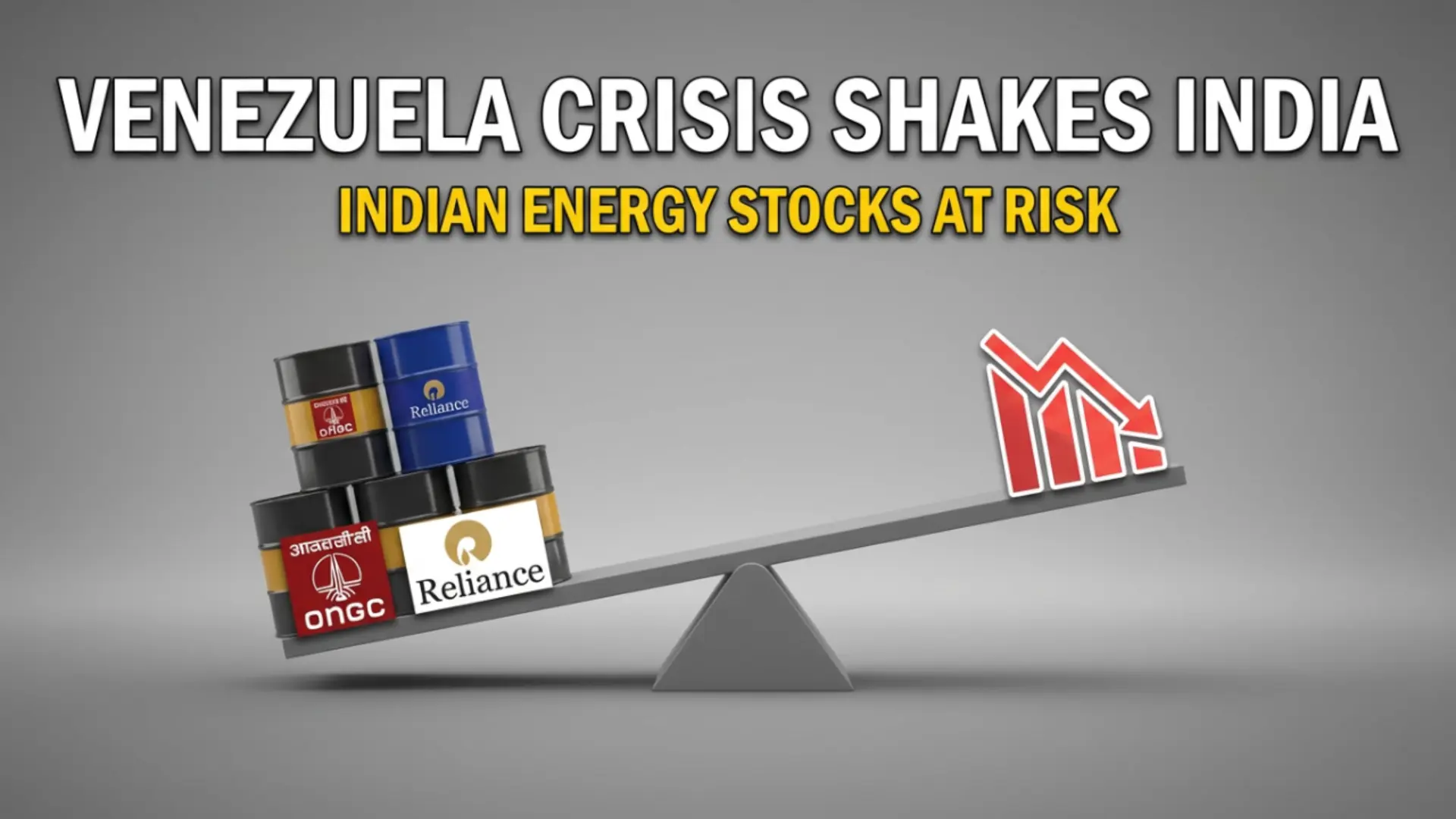
The geopolitical tension between Venezuela and the United States is once again in the headlines — and global markets are watching closely. For India, the story matters because several domestic companies have direct and indirect exposure to Venezuela’s energy, pharma, and metals sectors.
Analysts believe that if sanctions ease and oil flows improve, it could create short-term opportunities for some companies — while also increasing long-term uncertainty.
Why This Matters for India
According to broking firm Jefferies, if the US relaxes restrictions on Venezuelan crude exports, Indian refiners could access oil at a discount of USD 5–8 per barrel compared to Brent. This could strengthen refinery margins — especially for Reliance Industries — and improve profitability.
At the same time, ONGC may benefit from the possibility of recovering nearly USD 500 million in pending dividends from its Venezuela project at the San Cristobal oil field.
However, Jefferies also warns: if Venezuela ramps up production rapidly, global crude prices could soften, creating pressure on oil markets in the medium term.
Indian Companies With Exposure to Venezuela: Oil & Gas
ONGC Videsh holds stakes in two Venezuelan oil projects, planned with a long-term view — but recurring sanctions repeatedly raise the same question: Will the cash flows continue, or get stuck again?
Indian Oil Corporation (IOC) also has exposure through the Carabobo heavy-oil project. Because this investment is equity-based, market participants tend to act cautiously if the geopolitical situation worsens.
Meanwhile, companies like Nayara Energy have historically imported heavy Venezuelan crude. Even though imports have slowed, any renewed tension reminds investors of their past exposure.
Pharma: Opportunity Meets Payment Risk
- Sun Pharma operates through a registered subsidiary
- Cipla has exported essential medicines to the country for years
- Glenmark runs operations through a local subsidiary
- Dr. Reddy’s exited Venezuela in 2024 by selling its stake
For pharma companies, demand is rarely the issue — but currency instability and delayed payments create operational uncertainty whenever risk spikes.
Metals: High Capital, High Risk
In the metals space, Jindal Steel & Power operates one of Venezuela’s largest iron-ore complexes — projects that require heavy capital and rely on political stability. Investors typically react quickly when news from Venezuela turns negative.
Short-Term Gains vs. Long-Term Risk
The Venezuela connection highlights an important reality: exposure to such markets may be strategic — but short-term risks never disappear.
Key risk factors include:
- Sudden policy shifts
- Sanctions tightening or returning
- Payment delays
- Supply-chain disruptions
- Exchange-rate volatility
Investors must evaluate not only domestic fundamentals but also international exposure and geopolitical sensitivity.
Bottom Line
India’s energy, pharma, and metals companies remain deeply connected to Venezuela. Developments there will continue influencing market sentiment. While easing sanctions could unlock opportunities, volatility around geopolitics and payments means investors should stay cautious and well-informed.
Disclaimer
Views in this article reflect market analysis and may not represent the opinions of the publisher. Always consult a certified financial advisor before investing.
