
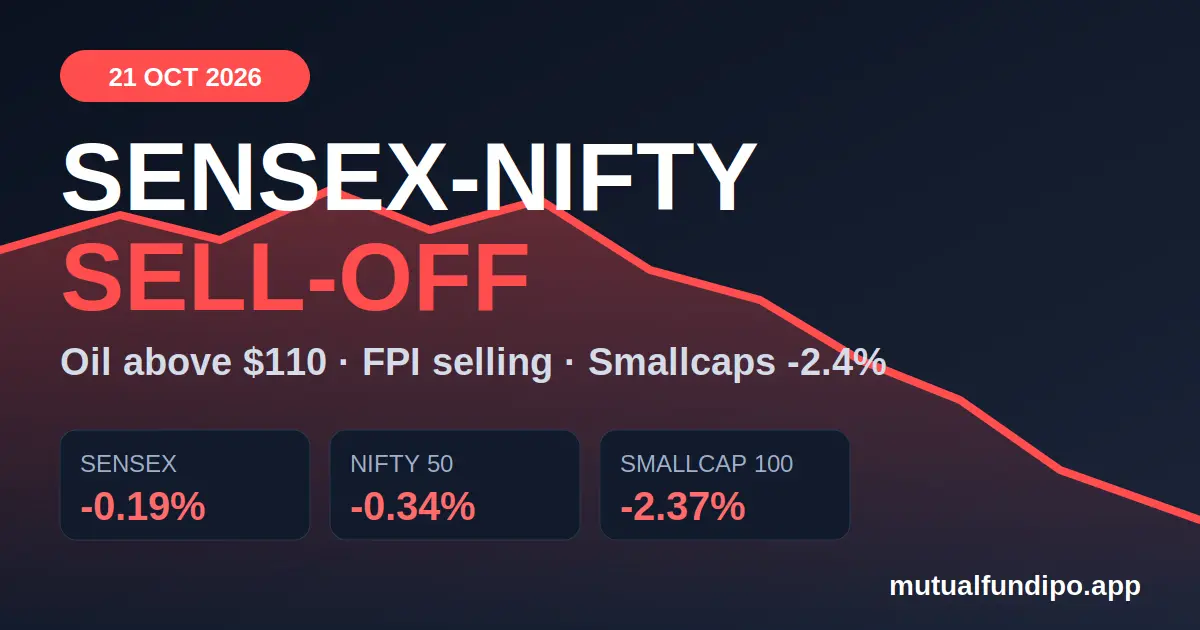
Quick summary: On October 21, 2026, Indian equities ended lower for the second straight session. The headline indices slipped modestly, but the real damage was in the broader market, where the Nifty Smallcap 100 fell about 2.4% and the Nifty Midcap 100 about 1.6%. Crude oil above $110 a barrel, Middle East tensions, persistent foreign selling and cautious Q2 earnings sentiment were the main triggers.
Table of Contents
- Market Snapshot: Sensex and Nifty on Oct 21, 2026
- Reason 1: Crude Oil Surges Past $110
- Reason 2: Fresh Middle East Tensions
- Reason 3: Persistent FPI Selling
- Reason 4: Global Bond Yields and Currency Worries
- Reason 5: Cautious Q2 Earnings Season
- Why Midcaps and Smallcaps Fell the Hardest
- Sector Performance: IT Rises, Chemicals Slide
- What Should Mutual Fund and SIP Investors Do?
- What to Watch Next
- Frequently Asked Questions
Market Snapshot: Sensex and Nifty on Oct 21, 2026
Early gains were wiped out by profit booking as the session progressed. Here is how the key indices closed:
| Index | Close | Change |
|---|---|---|
| BSE Sensex | 73,709.69 | -143.21 pts (-0.19%) |
| Nifty 50 | 22,811.35 | -77.60 pts (-0.34%) |
| Nifty Midcap 100 | n/a | -1.58% |
| Nifty Smallcap 100 | n/a | -2.37% |
| Nifty IT | n/a | +2.88% |
| Nifty Chemical | n/a | -2.64% |
Bajaj Finance, BSE Ltd and Eternal were among the top Nifty losers. Note that the benchmark fall looks small; the sharper pain was beneath the surface in mid and small caps.
Reason 1: Crude Oil Surges Past $110
Brent crude moved above the $110 per barrel mark in intraday trade on Wednesday. India imports most of its oil, so a spike like this widens the import bill, pressures the rupee and raises input and transport costs for companies. Sectors such as paints, chemicals, aviation, logistics and FMCG are usually hit first, and higher oil also tends to feed into inflation expectations.
Reason 2: Fresh Middle East Tensions
Concerns over supply disruption, maritime security and the safety of Saudi oil facilities added a geopolitical risk premium. Earlier in the week, worries around the Strait of Hormuz had already kept crude elevated near $107 to $109. When oil and geopolitics rise together, investors usually trim risk, and high-beta mid and small caps feel it most.
Reason 3: Persistent FPI Selling
Foreign portfolio investors have been net sellers for most of the past month. Estimates published around October 19 put October's net FPI selling at roughly Rs 52,100 crore, among the highest monthly outflows this year. Heavy foreign selling in large private banks weighs directly on the Sensex and Nifty, and weaker flows also reduce liquidity for the broader market.
Reason 4: Global Bond Yields and Currency Worries
Analysts have flagged that a durable easing in crude, global bond yields and currency volatility is needed before markets can stabilise. Higher global yields make emerging markets like India less attractive to foreign investors, while a weaker rupee raises the cost of dollar returns for them.
Reason 5: Cautious Q2 Earnings Season
The July-September (Q2 FY27) results season is underway, and traders are watching whether earnings can justify current valuations. Market experts say near-term direction will depend on the breadth of earnings delivery, trade negotiation progress and foreign flows. Any miss, especially from mid and small caps, can trigger sharp stock-specific falls.
Why Midcaps and Smallcaps Fell the Hardest
Mid and small caps tend to carry richer valuations, thinner liquidity and higher sensitivity to input costs. When oil rises and foreign money exits, profit booking in these segments is usually faster and deeper than in large caps. The IT rally on October 21 offered some support to the headline indices but did little for the broader market.
Sector Performance: IT Rises, Chemicals Slide
Nifty IT closed about 2.9% higher, helped by its lower sensitivity to crude and its dollar earnings. Nifty Chemical dropped about 2.6%, reflecting its dependence on oil-linked raw materials. Auto, metal and select heavyweight stocks also weighed on the market.
What Should Mutual Fund and SIP Investors Do?
- Continue your SIPs. Corrections let you buy more units at lower NAVs, which helps average your cost over time.
- Avoid panic redemptions. Selling after a fall often locks in losses.
- Review your asset allocation. If small-cap exposure has grown too large, rebalance gradually rather than abruptly.
- Keep an emergency fund. This prevents you from being forced to sell investments in a downturn.
- Match funds to your horizon. Equity funds suit goals five years or more away.
Explore more on mutualfundipo.app for mutual fund guides and IPO updates.
What to Watch Next
- Brent crude direction and any escalation in the Middle East
- Daily FPI and DII flow data
- Q2 results from banks, auto, FMCG and mid-cap companies
- Nifty support and resistance around 22,800 and 23,000
- Rupee movement and global bond yields
Frequently Asked Questions
Why did the Sensex and Nifty fall on October 21, 2026?
Profit booking, crude oil above $110, Middle East tensions, foreign selling and cautious earnings sentiment all contributed, with mid and small caps hit hardest.
How much did the Sensex and Nifty fall today?
The Sensex closed at 73,709.69, down about 0.19%, and the Nifty 50 ended at 22,811.35, down about 0.34%.
Is this a stock market crash?
The benchmark fall was modest, so it is better described as a broad-based correction, particularly in mid and small caps. Always check live data before drawing conclusions.
Should I stop my SIP during a market fall?
Generally no. SIPs are designed to work across market cycles, and falls can help lower your average purchase cost. Consult a SEBI-registered advisor for your own situation.
Which sectors gained and lost?
Nifty IT gained about 2.9%, while Nifty Chemical lost about 2.6%.
Disclaimer: This article is for informational and educational purposes only and is not investment advice. Mutual fund investments are subject to market risks; read all scheme-related documents carefully. Figures are based on publicly reported closing data for October 21, 2026 and may be revised.
Last updated: October 21, 2026 | Published by mutualfundipo.app
