
Table of Contents
3. What Powered 8.2% GDP Growth
4. Market Reaction & What’s Next
5. Sectors Set to Lead in FY26
🚀 Key Highlights at a Glance
- GDP at 8.2%, beating the 7.4% estimate
- Sharp rise from 5.4% last year
- Boost from manufacturing, construction & services
- Markets may favour banks, infra, capital goods & consumption
- Investors should track RBI stance, inflation & earnings
🇮🇳 India’s Growth is Back — and Stronger Than Expected
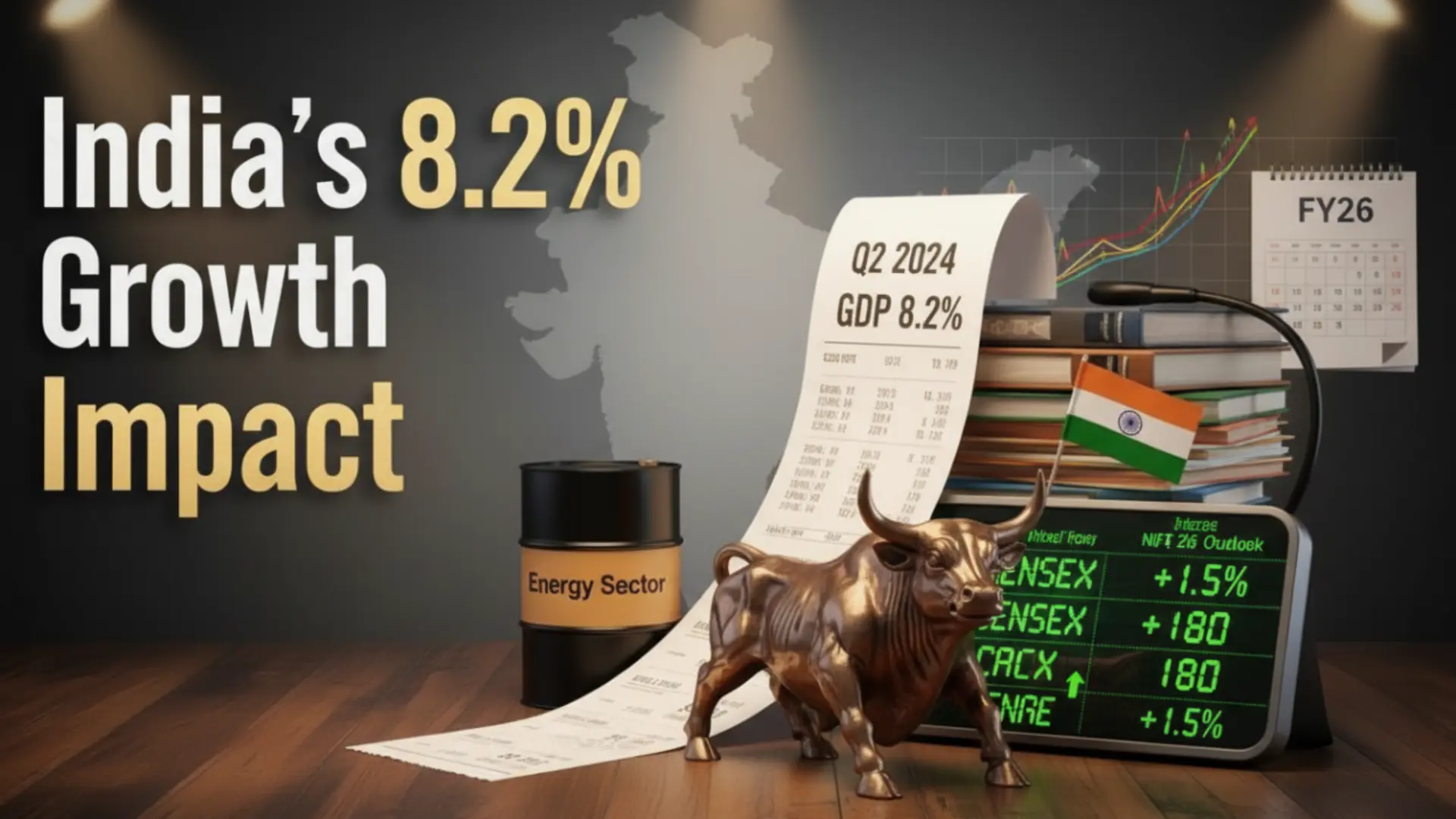
India posted 8.2% GDP growth for Q2 FY26, outpacing major global economies struggling with slowdowns. This momentum reflects:
- Strong domestic demand
- Policy stability
- Manufacturing uplift
- Infrastructure expansion
🔍 What Powered India’s 8.2% GDP Growth?
1️⃣ Manufacturing Revival
- Higher factory utilisation
- Robust PMI levels
- Stronger demand across sectors
- Improved supply chain stability
2️⃣ Infrastructure & Construction Boom
- Rapid national highway development
- Railway modernization
- High EPC inflows
- Cement, steel & machinery demand surge
3️⃣ Services Sector Strength
- Financial services & consumption
- Travel & tourism growth
- Digital payments at record highs
📈 Market Reaction & What’s Coming Next?
Markets reacted positively but remain watchful for earnings upgrades.
- Higher GDP → Higher earnings
- Higher earnings → Stronger valuations
- Stronger valuations → Market upside
🔥 Sectors Set to Lead FY26
1️⃣ Banking & Financial Services
Expect:
- Stronger credit growth
- Lower NPAs
- Higher profitability
- Faster loan disbursements
Banks tend to be the first beneficiaries of fast economic expansion.
2️⃣ Capital Goods & Infrastructure
- Huge order inflows
- Faster project execution
- Strong stock performance
3️⃣ Manufacturing & Industrials
Major boost from PLI sectors—EVs, electronics, semiconductors.
4️⃣ Consumption & Retail
- FMCG stable
- Auto demand healthy
- Fashion, electronics & retail are seeing growth
5️⃣ IT & Digital Services
Strong domestic digital growth continues.
🧭 What Should Investors Watch?
- RBI policy stance
A strong GDP print may reduce the likelihood of aggressive rate cuts.
Markets will track:
- Inflation
- Liquidity
- RBI’s growth commentary
Corporate earnings (Q3 & Q4)
Analysts expect earnings upgrades across banking, manufacturing, and infrastructure.
Global oil prices, US Fed decisions
- US Fed decisions
- Oil price trends
- Geopolitical risks
These will influence FPI flows into India.
Budget 2026 expectations
Key expectations include:
- Continued capex focus
- Fiscal consolidation roadmap
- Policies to support exports & manufacturing
👩💼 What This Means for Retail Investors
With strong macro fundamentals, FY26 could be a high-opportunity year for investors.
Benefits include:
- Better earnings visibility
- Strong SIP returns
- Opportunities in midcaps & growth sectors
❓ FAQs
1. What caused the 8.2% GDP growth?
Strong manufacturing, infrastructure expansion, and services demand.
2. How does GDP impact markets?
Higher GDP boosts earnings, valuations, and market sentiment.
3. Will RBI cut rates?
RBI may stay cautious amid inflation risks.
4. Which sectors benefit?
Banks, infra, manufacturing, consumption, digital services.
5. Is now a good time to invest?
Yes—strong macros favour long-term and SIP investors.
⭐ Conclusion
India’s 8.2% GDP growth signals powerful economic momentum. With strong demand, manufacturing revival, and record infrastructure investment, FY26 could be one of the most promising years for markets and investors.
