
Financial Planning: A Complete Beginner's Guide to Secure Your Financial Future
Financial planning is the process of managing your income, expenses, savings, investments, insurance, and taxes to achieve your financial goals. Whether you want to buy a home, build an emergency fund, or retire comfortably, a proper financial plan helps you make informed decisions and stay financially secure.
Table of Contents
- What is Financial Planning?
- Why is Financial Planning Important?
- Step-by-Step Financial Planning Process
- Create a Monthly Budget
- Build an Emergency Fund
- Buy Adequate Insurance
- Start Investing Early
- Reduce Bad Debt
- Tax Planning
- Review Your Financial Plan
- Financial Planning Example
- Benefits of Financial Planning
- Common Mistakes
- Financial Planning Tips
- Frequently Asked Questions
- Conclusion
What is Financial Planning?
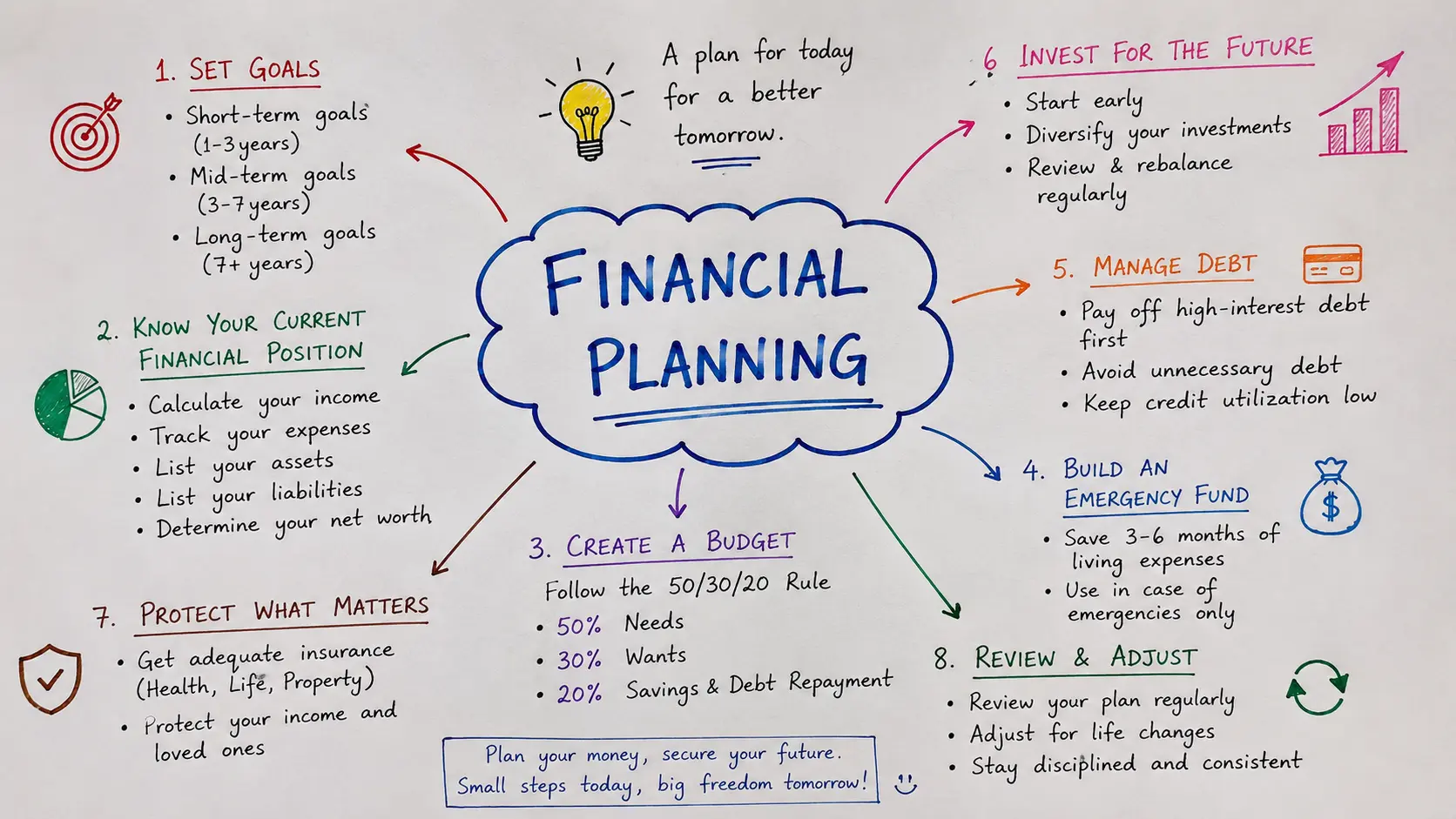
Financial planning is a structured process of organizing your money to achieve short-term and long-term financial goals. It includes budgeting, saving, investing, insurance planning, retirement planning, tax management, and debt management.
A well-planned financial strategy ensures that your income is used efficiently while preparing you for future financial needs and unexpected emergencies.
Why is Financial Planning Important?
- Helps manage your monthly budget.
- Builds long-term wealth.
- Creates financial security.
- Prepares for emergencies.
- Reduces unnecessary debt.
- Supports retirement planning.
- Helps achieve financial goals faster.
- Improves tax efficiency.
Step-by-Step Financial Planning Process
1. Assess Your Financial Situation
Calculate your monthly income, expenses, savings, loans, and investments. Understanding your current financial position is the first step toward effective planning.
Example
| Category | Amount |
|---|---|
| Monthly Income | ₹70,000 |
| Monthly Expenses | ₹45,000 |
| Monthly Savings | ₹25,000 |
2. Set Financial Goals
Create realistic financial goals.
- Short-Term Goals (1–3 Years)
- Medium-Term Goals (3–7 Years)
- Long-Term Goals (7+ Years)
Examples
- Emergency Fund
- Buying a Car
- Home Purchase
- Children's Education
- Retirement Planning
Create a Monthly Budget
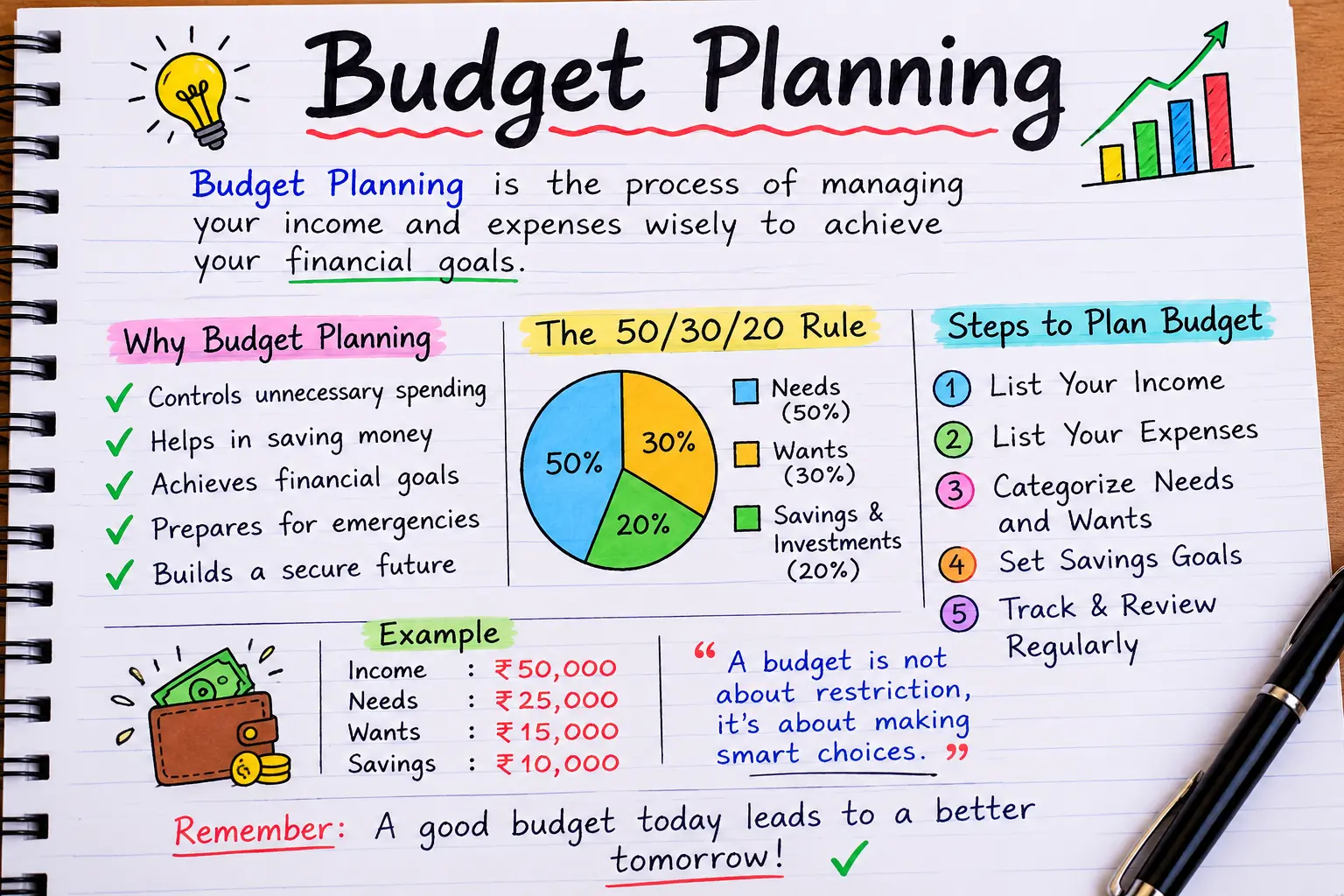
The popular 50/30/20 budgeting rule helps balance spending and saving.
| Category | Percentage |
|---|---|
| Needs | 50% |
| Wants | 30% |
| Savings & Investments | 20% |
Example:
Monthly Salary = ₹80,000
Needs = ₹40,000
Lifestyle = ₹24,000
Savings = ₹16,000
Build an Emergency Fund
Keep six to twelve months of living expenses in an emergency fund to cover unexpected situations like job loss or medical emergencies.
Example
Monthly Expenses = ₹40,000
Emergency Fund = ₹2,40,000
Buy Adequate Insurance
- Health Insurance
- Term Life Insurance
- Vehicle Insurance
- Home Insurance
Insurance protects your family from financial risks and unexpected expenses.
Start Investing Early
Early investing allows your money to grow through the power of compounding.
Popular investment options include:
- Mutual Funds
- SIP
- Stocks
- PPF
- NPS
- Fixed Deposits
- Bonds
- Gold
Example:
Invest ₹5,000 every month through a SIP. Assuming an average annual return of 12%, your investment can grow substantially over the long term because of compounding.
Reduce Bad Debt
Avoid high-interest loans and credit card debt. Pay off expensive loans first to improve your financial health.
- Credit Card Debt
- Personal Loans
- Unnecessary EMIs
Tax Planning
Proper tax planning helps maximize savings through legal tax-saving investments.
- ELSS Mutual Funds
- PPF
- NPS
- Tax Saving Fixed Deposits
- Health Insurance
Review Your Financial Plan
Review your financial plan every six to twelve months or whenever your financial situation changes.
- Salary Increase
- Marriage
- Buying a Home
- Children
- Retirement Planning
Financial Planning Example
| Category | Monthly Amount |
|---|---|
| Salary | ₹60,000 |
| Household Expenses | ₹30,000 |
| SIP Investment | ₹10,000 |
| Emergency Fund | ₹5,000 |
| Insurance | ₹2,000 |
| Retirement Savings | ₹5,000 |
| Personal Expenses | ₹8,000 |
Benefits of Financial Planning
- Better Money Management
- Financial Security
- Peace of Mind
- Goal-Based Investing
- Retirement Readiness
- Wealth Creation
- Tax Savings
- Emergency Preparedness
Common Financial Planning Mistakes
- Not Following a Budget
- Ignoring Emergency Savings
- Delaying Investments
- Ignoring Insurance
- Taking Excessive Loans
- Investing Without Goals
- Never Reviewing Your Plan
Financial Planning Tips
- Start investing early.
- Save before you spend.
- Increase savings after every salary hike.
- Diversify your investments.
- Avoid unnecessary debt.
- Review your financial plan regularly.
- Stay disciplined with your financial goals.
Frequently Asked Questions
What is financial planning?
Financial planning is the process of managing your finances to achieve your short-term and long-term goals through budgeting, saving, investing, and risk management.
Why is financial planning important?
It helps you control expenses, build wealth, reduce debt, prepare for emergencies, and achieve financial independence.
How much should I save every month?
A good rule is to save at least 20% of your monthly income, depending on your financial goals.
What is the first step in financial planning?
The first step is to assess your income, expenses, savings, assets, and liabilities to understand your financial position.
Conclusion
Financial planning is one of the most effective ways to achieve long-term financial stability and peace of mind. By creating a budget, building an emergency fund, investing consistently, protecting yourself with insurance, and reviewing your progress regularly, you can confidently work toward your financial goals and create a secure future for yourself and your family.
