
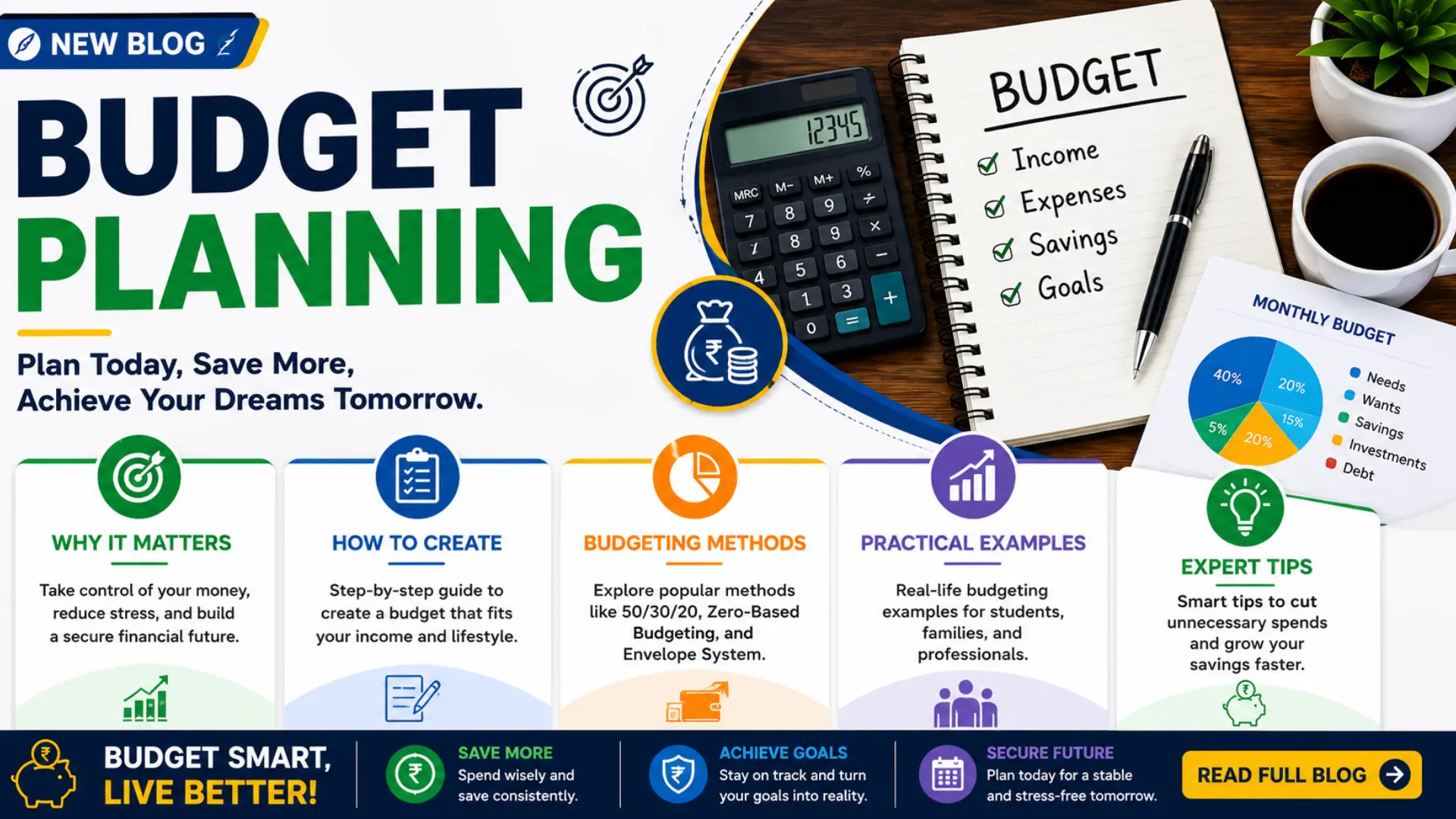
Budget Planning: A Complete Guide to Managing Your Money Wisely
Budget planning is the foundation of financial success. Whether you're a student, employee, freelancer, or business owner, creating a budget helps you control spending, save money, and achieve your financial goals. This guide explains budget planning in simple language with practical examples.
Table of Contents
- 1. What is Budget Planning?
- 2. Why Budget Planning is Important
- 3. Steps to Create a Budget
- 4. Popular Budgeting Methods
- 5. Monthly Budget Example
- 6. Benefits of Budget Planning
- 7. Common Budgeting Mistakes
- 8. Budget Planning Tips
- 9. Frequently Asked Questions
- 10. Conclusion
What is Budget Planning?
Budget planning is the process of estimating your income and expenses over a specific period, usually monthly or yearly. A budget acts as a financial roadmap that helps you spend wisely, save consistently, and avoid unnecessary debt.
A good budget enables you to monitor every rupee you earn and spend while preparing for future financial needs such as buying a house, children's education, retirement, or emergency situations.
Why Budget Planning is Important
Budget planning provides several financial advantages, including:
- Know exactly where your money goes.
- Reduce unnecessary expenses.
- Increase monthly savings.
- Build an emergency fund.
- Avoid unnecessary debt.
- Achieve short-term and long-term financial goals.
- Improve financial discipline.
Steps to Create a Budget
Step 1: Calculate Your Monthly Income
Include every income source:
- Salary
- Business Income
- Freelancing
- Rental Income
- Interest Income
Example:
Monthly Salary = ₹50,000
Step 2: List Your Expenses
Separate expenses into fixed and variable categories.
Fixed Expenses
- House Rent
- EMI
- Insurance
- School Fees
- Internet Bill
Variable Expenses
- Groceries
- Fuel
- Shopping
- Entertainment
- Dining Out
Step 3: Compare Income and Expenses
| Income | Amount |
|---|---|
| Monthly Salary | ₹50,000 |
| Expense | Amount |
|---|---|
| Rent | ₹12,000 |
| Food | ₹8,000 |
| Transport | ₹3,000 |
| Utilities | ₹2,500 |
| EMI | ₹7,500 |
| Entertainment | ₹2,000 |
| Savings | ₹10,000 |
Remaining Balance: ₹5,000
Step 4: Set Financial Goals
- Create an Emergency Fund
- Buy a Home
- Purchase a Car
- Children's Education
- Retirement Planning
- Vacation Savings
Step 5: Review Your Budget Monthly
Update your budget every month to account for changes in income or expenses. Regular reviews help you stay on track and improve your financial habits.
Popular Budgeting Methods
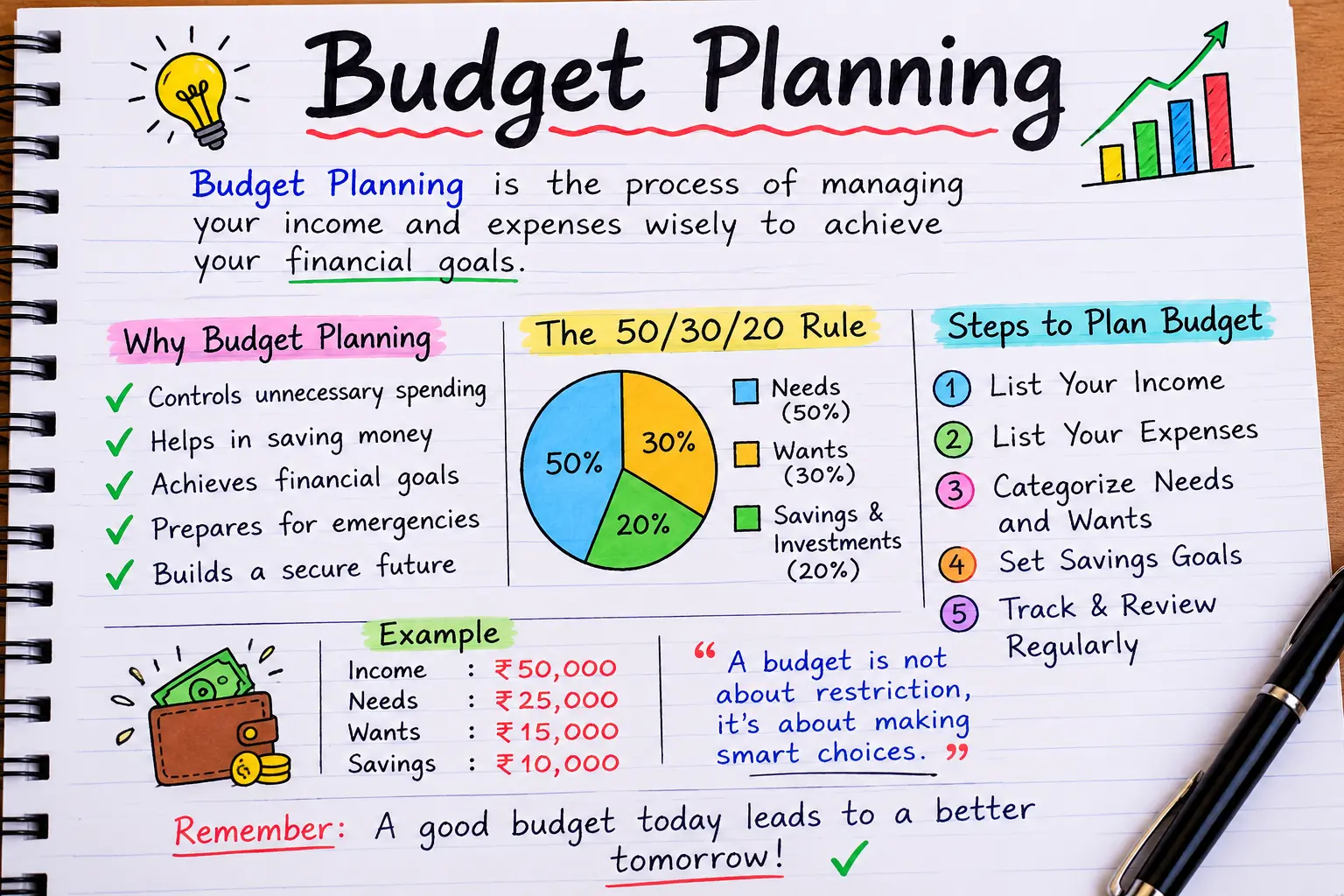
1. 50/30/20 Budget Rule
- 50% for Needs
- 30% for Wants
- 20% for Savings
Example:
- Income = ₹60,000
- Needs = ₹30,000
- Wants = ₹18,000
- Savings = ₹12,000
2. Zero-Based Budgeting
Assign every rupee a specific purpose until your income minus expenses equals zero. This method helps maximize financial control.
3. Envelope Budgeting
Allocate cash into separate envelopes for groceries, fuel, shopping, and entertainment. Stop spending from a category once its envelope is empty.
Monthly Budget Example
| Category | Budget |
|---|---|
| Income | ₹70,000 |
| Rent | ₹15,000 |
| Groceries | ₹8,000 |
| Utilities | ₹3,000 |
| Transportation | ₹4,000 |
| EMI | ₹10,000 |
| Insurance | ₹3,000 |
| Entertainment | ₹4,000 |
| Savings | ₹18,000 |
| Emergency Fund | ₹5,000 |
Benefits of Budget Planning
- Better financial control
- Reduced financial stress
- Higher savings
- Debt management
- Improved cash flow
- Investment planning
- Emergency preparedness
- Long-term wealth creation
Common Budgeting Mistakes
- Ignoring small daily expenses
- Not tracking spending
- Overspending with credit cards
- Skipping emergency savings
- Not reviewing the budget regularly
- Setting unrealistic financial goals
Budget Planning Tips
- Track every expense.
- Save before you spend.
- Avoid impulse purchases.
- Review your budget every month.
- Use budgeting apps or spreadsheets.
- Increase savings whenever your income grows.
- Maintain an emergency fund covering 3–6 months of expenses.
Frequently Asked Questions
What is Budget Planning?
Budget planning is the process of organizing your income and expenses to manage money efficiently and achieve your financial goals.
How often should I review my budget?
Review your budget at least once every month or whenever your financial situation changes.
Which budgeting method is best?
The 50/30/20 Rule is ideal for beginners, while Zero-Based Budgeting offers greater control over spending.
How much should I save each month?
Financial experts recommend saving at least 20% of your monthly income whenever possible.
Conclusion
Budget planning is a powerful habit that helps you manage your money effectively, reduce financial stress, and achieve both short-term and long-term financial goals. By creating a realistic budget, tracking expenses, and reviewing your finances regularly, you can build a secure financial future. Start budgeting today to take control of your finances and enjoy greater financial freedom.
Start planning your budget today and take the first step toward financial success!
